The Best of Both Worlds: Customized Memory Care and Home-Like Senior Living
Business Name: BeeHive Homes of Albuquerque NM - Assisted Living Facility
Address: 6401 Corona Ave NE, Albuquerque, NM 87113
Phone: (505) 221-6400
BeeHive Homes of Albuquerque NM - Assisted Living Facility
BeeHive Village is a premier Albuquerque Assisted Living facility and the perfect transition from an independent living facility or environment. Our Alzheimer care in Albuquerque, NM is designed to be smaller to create a more intimate atmosphere and to provide a family feel while our residents experience exceptional quality care. Memory loss, dementia and Alzheimer's disease are becoming quite pervasive in our society. Dementia care assisted living in Albuquerque NM offers catered memory care services, attention and medication management, often in a secure dementia assisted living in Albuquerque or nursing home setting. We invite you to come and visit our elder care and feel what truly makes us the next best place to home.
6401 Corona Ave NE, Albuquerque, NM 87113
Business Hours
Families hardly ever begin thinking of memory care and assisted living in a calm, leisurely way. More frequently, the conversation starts after a scare: a fall on the stairs, food left on a lit range, a parent roaming in the evening and not keeping in mind how to get back to bed. You understand you are balancing two urgent requirements at once. You desire your loved one safe, supported, and medically kept an eye on. You likewise desire them to seem like themselves, in a place that resembles home more than a hospital.
The excellent news is that senior care has altered a great deal over the last years. Specialized dementia care can now be provided in settings that feel warm and familiar instead of institutional. The difficulty is sorting through the language, levels of care, and promises, then selecting a community that truly offers both customization and a home-like quality.
This is where experience matters. I have sat with households at the cooking area table, took a look at the pill organizers and overdue bills, viewed the tension in between guilt and fatigue, and walked them through these choices. The ideal fit is seldom about marble lobbies or glossy brochures. It has to do with the details: who notifications when your mother is quieter than normal, who knows your father prefers his coffee in a real mug instead of a paper cup, who understands the way dementia improves a day.
This article walks through what "the very best of both worlds" can really look like when assisted living, memory care, and respite care are attentively combined.
Why "home-like" is not an ornamental theme
A lot of communities claim to feel "much like home." It shows up in marketing copy, staged photos of cookies on granite counters, and relaxing fireplaces in common areas. Those things are pleasant, but by themselves they do not make a location seem like home to someone living with dementia.
Home is mainly about three things: familiarity, autonomy, and relationships.
Familiarity originates from predictable areas, things, and routines. A hallway that always results in the exact same bright sitting area is more reassuring than intricate architecture that puzzles somebody currently battling with memory. Personal furniture, familiar artwork, and even the exact same style of chair a parent has actually used for years can anchor them emotionally.
Autonomy shows up in little options: when to awaken, what to use, whether to join an activity or sit quietly with a book or music. A really home-like senior living community does not run on a rigid, one-size-fits-all schedule, specifically in memory care. Individuals with dementia typically have really specific rhythms. Requiring everybody into the same schedule normally creates more stress and anxiety and behavior issues, not fewer.
Relationships are the real core. A resident is even more likely to feel at home when team member know their story, notification subtle modifications, and treat them as an individual, not a medical diagnosis. Assisted living and memory care settings that highlight connection of caretakers and smaller sized personnel teams tend to produce deeper bonds. Those bonds make it simpler to deliver extremely personalized dementia care without it feeling clinical.
A building can be gorgeous and still feel cold. A modest, older community can feel deeply home-like if residents are known, routines are customized, and family members feel welcome and involved.
How assisted living and memory care vary - and where they overlap
Families are typically uncertain where assisted living ends and memory care begins. The names are confusing, and guidelines differ by state, but there are some beneficial patterns.
Assisted living is typically created for older grownups who require help with everyday activities such as bathing, dressing, medication management, and meal preparation, but who do not require the strength of nursing home care. Locals may have mild cognitive disability, however they can normally follow directions, utilize call buttons, and get involved more independently in activities.
Memory care, on the other hand, is specialized senior care for individuals living with Alzheimer's illness or other kinds of dementia. It is not just about a secured door. It has to do with an environment, staffing design, and day-to-day program developed for individuals who might have:
- Significant short-term memory loss
- Difficulty evaluating time, location, and safety
- Changes in language and interaction
- Higher danger of wandering or disorientation
- Behavioral signs such as agitation or fear
That is list one.
Good memory care neighborhoods are still technically assisted living, however with added know-how and structure. They frequently include smaller, more included neighborhoods, higher staff-to-resident ratios, specialized training, and activity programs tailored to different stages of dementia.
There is also a happy medium. Some assisted living communities offer what they call "boosted" or "early-stage" memory support for citizens who do not yet require fully secured dementia care, but do need additional hints, mild redirection, and closer medication oversight. For households, this can use a softer transition from independent or conventional assisted living into more specific dementia care.
The overlap in between assisted living and memory care boils down to the basics: security, help with day-to-day tasks, and social engagement. The difference depends on how well the community comprehends dementia, expects its development, and adapts care plans as needs evolve.
Personalized memory care: what it appears like in practice
Personalized memory care is more than placing a resident's name into a care strategy template. It means constructing daily life around the individual's history, preferences, and present capabilities, then upgrading that strategy as dementia progresses.
In concrete terms, customization touches a number of areas.
Care routines ought to show life-long routines. If somebody worked night shifts for forty years, it is unrealistic to expect them to settle happily into a 7 a.m. Wake-up, breakfast at 8, and early morning physical fitness class. An individualized technique might enable a late-morning schedule, with quiet, low-stimulation alternatives over night if they are awake.
Communication style matters. Some residents respond better to mild humor. Others require extremely clear, basic guidelines. Personnel who take time to discover how everyone processes information can avoid a great deal of frustration. For example, rather of saying, "Do you want to shower now or later on?" personnel might say, "It is time for your shower now, and I will help you. Later, we will have your tea."
Activities ought to line up with past interests and current strengths. A former accountant might delight in sorting or budgeting video games more than arts and crafts. A retired instructor may light up when asked to "assist" with reading activities. Personalization is partly about dignity: using significant functions instead of simply supplying entertainment.
Family input is essential. Families typically hold essential details that do not appear in medical records: the song that relaxes a resident throughout sundowning, the food that always upsets their stomach, the factor they fear closed doors. Active communities invite families into care preparation discussions, especially at move-in and throughout the first couple of months.
Lastly, customization must be dynamic. Dementia is not static. A care plan composed six months ago may not fit existing reality. Strong memory care programs schedule regular reassessments and change both care levels and day-to-day regimens to maintain the highest possible quality of life.
The power of small, familiar environments
One of the most considerable shifts in senior living and dementia care has been an approach smaller sized, cluster-style settings. Rather of one big building with dozens of homeowners in a single memory care unit, some communities produce smaller homes: possibly ten to sixteen citizens sharing a kitchen area, dining area, and living room, with private or semi-private bedrooms.
Smaller environments assist in a number of ways.
They decrease overstimulation. Big dining-room, long corridors, and crowded activity areas can overwhelm somebody with dementia. In a compact, pleasant environment, residents see the exact same faces more frequently and discover the design more easily.
They support more powerful relationships. Personnel who consistently operate in one little household be familiar with locals totally. They recognize when something is "off" before it becomes a crisis. A caretaker may observe that a resident who constantly finishes breakfast is still picking at their toast after thirty minutes, which may indicate discomfort, depression, or infection.
They feel less institutional. Open cooking areas, family-style meals, and shared living rooms mimic the design of a home. Locals can aid with basic tasks, like stirring cookie dough or folding towels, which supports a sense of purpose.
None of this needs luxury surfaces. I have seen modest, older buildings where the memory care corridor was divided into "neighborhoods" with distinct color design, memory boxes by each door, and little group dining. The outcome was calmer citizens, fewer behavioral events, and personnel who mentioned "our little household" instead of "the unit."
Families evaluating senior care alternatives should look beyond surface visual appeals and view how residents move through the space. Do they seem oriented and settled, or restless and confused? That observation states more about the environment than any brochure.
Respite care as a bridge, not an afterthought
Respite care is often marketed as a short-term stay alternative for elders, supplying a break for household caretakers. That description is accurate however insufficient. Used attentively, respite stays can be a strategic tool in the transition into assisted living or memory care.
For households caring for somebody with dementia at home, a temporary stay in a neighborhood can serve several purposes. It offers a trial run of memory care without the psychological weight of an irreversible move. Both the resident and family can experience day-to-day routines, satisfy personnel, and see how the individual responds. Staff can observe patterns that might be more difficult to see in brief tours.
Respite care likewise provides a safety net after hospitalization. Older grownups with dementia typically experience a steep decline after surgery, infection, or a health center stay. Going directly back home might not be safe or sustainable. A brief stay in a senior living neighborhood that comprehends dementia care can stabilize medications, support rehab, and prevent readmission.
There is another subtle benefit. Numerous households ignore their own burnout. Around-the-clock guidance, especially for a loved one who wanders or experiences nighttime confusion, is physically and mentally draining. An organized respite stay can permit caregivers to rest, attend to their own health, and return with more perseverance and perspective. That, in turn, can delay the requirement for a full-time move.
The secret is to choose respite care in a neighborhood that utilizes the very same personnel, regimens, and expectations as long-lasting locals. If respite guests are treated as short-lived add-ons, it will be more difficult to judge what ongoing life there would feel like.
Safety without a locked-down feeling
One of the hardest balances in dementia care is preserving safety without creating a sense of jail time. Families want to know their loved one will not wander into traffic or get lost. Locals, nevertheless, frequently bristle at visible locks and restrictions, particularly in earlier stages.
Thoughtful communities create safety features that are both robust and discreet.
Secured boundaries can be integrated with internal strolling paths and gardens, allowing homeowners to move easily within a safe area. Doors might utilize discreet keypads or delayed egress systems that need purposeful effort to exit, decreasing spontaneous roaming while permitting staff-controlled outings.
Visual cues can discreetly guide residents far from risks. For example, painting exit doors the very same color as walls or utilizing patterns that do not draw attention can decrease exit-seeking habits. Clear signs with both words and images assists residents find dining-room, washrooms, and their own spaces without feeling constantly lost.
Staff presence is another safety layer. A neighborhood may technically have actually protected doors, however if personnel hardly ever walk the halls or engage with citizens, safety is still fragile. Alternatively, in a well-staffed, smaller sized memory care area, caretakers often obstruct issues before they escalate. A resident who begins pacing near an exit may be carefully rerouted into a walk in the yard or an activity that matches their energy level.
Families exploring communities ought to observe not just the locks, however likewise the atmosphere. Are individuals complimentary to stroll, sit outside, and explore within safe borders? Or are they clustered near nurses' stations, appearing restless? The goal is a setting where safety measures fade into the background while life remains complete and flexible.
When assisted living is not enough
Sometimes families hope that a standard assisted living apartment with some extra assistance will be sufficient for a loved one with dementia. In early phases, that can work. In time, however, specific patterns signal that it might not be safe or sustainable.
The following signs often indicate that an individual may benefit more from specialized memory care than from basic assisted living alone:
- Frequent wandering, exit-seeking, or getting lost within the building
- Difficulty understanding or utilizing call buttons and safety systems
- Escalating behavioral signs such as aggression or extreme agitation
- Repeated medication rejections or mismanagement regardless of cues
- Inability to take part in group activities due to confusion or overstimulation
That is list two.
These circumstances are not failures. They are indications that the illness has progressed, and the care environment must change appropriately. Staying too long in an uncomfortable setting can in fact increase distress, both for the person with dementia and for those around them.
From a personnel point of view, basic assisted living teams may not be trained for complicated dementia care. They often serve residents with a broad mix of physical needs and only mild cognitive concerns. When a couple of homeowners need far more guidance, it strains the entire system, no matter how compassionate the personnel may be.
Moving into memory care previously, when the individual can still adjust rather to brand-new regimens and develop trust with new caregivers, can be kinder than waiting until a crisis requires a rushed move.
Questions that expose the true culture of a community
Choosing a senior care neighborhood is not about getting every answer "right" on a checklist, but about comprehending culture. A building can pass regulatory evaluations and still not feel like a great home. Discussions with staff, homeowners, and households frequently tell you more than any function list.
When you visit neighborhoods, consider asking concerns that uncover how they think and operate:
Ask how they train personnel for dementia care. Listen for specifics, not unclear statements. You wish to find out about initial orientation, continuous education, and how they handle typical dementia-related behaviors such as sundowning or exit-seeking.
Ask about personnel turnover. High turnover in memory care typically results in irregular care and less familiarity with citizens. A community that buys its group typically has more stable staffing and much better relationships with residents.
Ask how they individualize everyday routines. Demand concrete examples: "Tell me about a resident whose regimen is really different from others, and how you accommodate that." The quality of their answer will reveal how versatile they truly are.
Ask how they include families. Try to find more than arranged care conferences. Strong neighborhoods welcome family viewpoints, supply regular updates, and encourage visits and participation in occasions without making households seem like visitors in a medical facility.
Ask how they deal with medical modifications and emergencies. Discover what happens if a resident's dementia advances, if they establish brand-new health conditions, or if they need hospice support. A community comfy with these shifts can frequently supply connection, sparing households from several disruptive moves.

While you are there, pay attention to nonverbal hints. Do residents look groomed, however likewise unwinded? Do team member make eye contact, greet citizens by name, and notice when someone needs attention? Does the place smell like a home where individuals live, with cooking aromas and periodic mess, or does it seem like a showplace that no one can touch?
Balancing emotion, practicality, and timing
Every family faces timing. Move too soon and you fear eliminating self-reliance. Wait too long and you run the risk of a crisis that requires rushed decisions. There is no ideal date circled on a calendar. There are, however, patterns.
Families seldom remorse moving a bit earlier into a helpful, well-matched memory care or assisted living environment. They typically say, "I want we had actually done this 6 months earlier." By the time they make the move, they can see just how much psychological and physical energy they were investing just to keep somebody hardly safe at home.
On the other hand, forcing a move against a loved one's will with no preparation typically backfires. The person feels rooted out and may resist care, particularly if they are still aware enough to feel that their control is slipping.
One useful approach is steady exposure. Use respite care or adult day programs to present the concept of spending time in a senior living setting. Visit for meals, take part in activities, and construct familiarity with staff. In parallel, have honest conversations with your loved one at their level of understanding, involving them in decisions where possible.
It is also crucial to assess your own limits reasonably. Taking care of somebody with dementia is not a test of love that you either pass or stop working. It is a requiring function that ultimately needs a group. Assisted living, memory care, and respite care are tools to broaden that team. When utilized attentively, they protect relationships by shifting you from exhausted caregiver to more present spouse, kid, daughter, or friend.
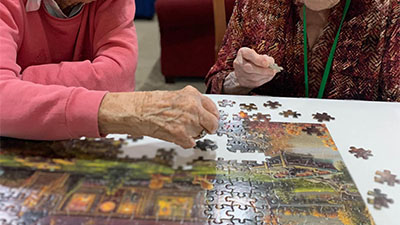
What "the very best of both worlds" truly means
The phrase "best of both worlds" can sound like marketing till you see it in reality. In a well-designed, home-like senior living community with strong dementia care, you might discover the following in a single afternoon.
A resident with mid-stage Alzheimer's is baking muffins with a caregiver, memory care home stirring batter with consistent hands because muscle memory from years in her own cooking area kicks in. Another resident is dozing in his preferred reclining chair, a fleece blanket from home tucked around his legs, jazz music playing gently nearby. Down the hall, a little group remains in the garden, touching herbs and smelling tomatoes, with staff close at hand but not hovering.
Families come and go easily. One child brings her father's old fishing hat and hangs it by his door, discussing to personnel how essential the lake remains in his memories. The nurse on responsibility discusses she has already added a fishing show to his television favorites.

Behind the scenes, medications are precisely handled, blood pressures are examined, and fall threats are monitored. Care plans are examined, and group gathers discuss who seemed more withdrawn today and who might need extra motivation at dinner.
It is scientific skills covered in familiarity and humanity.
That is the best of both worlds: customized memory care and assisted living that feel not like a compromise, however like a new variation of home. Not the house your loved one resided in for fifty years, however a location where their history is honored, their present needs are fulfilled, and their staying strengths are nurtured.
For families dealing with these choices, the objective is not to find a best community. It is to discover a setting where your loved one can live a life that is as safe, dignified, and meaningful as their age and condition permit. When you hear staff talk comfortably about dementia, when you see locals taken part in easy, real activities, and when you feel your own shoulders drop as you walk through the door, you are most likely closer than you think.
BeeHive Homes of Albuquerque NM - Assisted Living Facility provides assisted living care
BeeHive Homes of Albuquerque NM - Assisted Living Facility provides memory care services
BeeHive Homes of Albuquerque NM - Assisted Living Facility provides respite care services
BeeHive Homes of Albuquerque NM - Assisted Living Facility supports assistance with bathing and grooming
BeeHive Homes of Albuquerque NM - Assisted Living Facility offers private bedrooms with private bathrooms
BeeHive Homes of Albuquerque NM - Assisted Living Facility provides medication monitoring and documentation
BeeHive Homes of Albuquerque NM - Assisted Living Facility serves dietitian-approved meals
BeeHive Homes of Albuquerque NM - Assisted Living Facility provides housekeeping services
BeeHive Homes of Albuquerque NM - Assisted Living Facility provides laundry services
BeeHive Homes of Albuquerque NM - Assisted Living Facility offers community dining and social engagement activities
BeeHive Homes of Albuquerque NM - Assisted Living Facility features life enrichment activities
BeeHive Homes of Albuquerque NM - Assisted Living Facility supports personal care assistance during meals and daily routines
BeeHive Homes of Albuquerque NM - Assisted Living Facility promotes frequent physical and mental exercise opportunities
BeeHive Homes of Albuquerque NM - Assisted Living Facility provides a home-like residential environment
BeeHive Homes of Albuquerque NM - Assisted Living Facility creates customized care plans as residents’ needs change
BeeHive Homes of Albuquerque NM - Assisted Living Facility assesses individual resident care needs
BeeHive Homes of Albuquerque NM - Assisted Living Facility accepts private pay and long-term care insurance
BeeHive Homes of Albuquerque NM - Assisted Living Facility assists qualified veterans with Aid and Attendance benefits
BeeHive Homes of Albuquerque NM - Assisted Living Facility encourages meaningful resident-to-staff relationships
BeeHive Homes of Albuquerque NM - Assisted Living Facility delivers compassionate, attentive senior care focused on dignity and comfort
BeeHive Homes of Albuquerque NM - Assisted Living Facility has a phone number of (505) 221-6400
BeeHive Homes of Albuquerque NM - Assisted Living Facility has an address of 6401 Corona Ave NE, Albuquerque, NM 87113
BeeHive Homes of Albuquerque NM - Assisted Living Facility has a website https://beehivehomes.com/locations/albuquerque/
BeeHive Homes of Albuquerque NM - Assisted Living Facility has Google Maps listing https://maps.app.goo.gl/3oqufzNUPNMqK22LA
BeeHive Homes of Albuquerque NM - Assisted Living Facility has Facebook page https://www.facebook.com/BeeHiveHomesAbq
BeeHive Homes of Albuquerque NM - Assisted Living Facility has an YouTube page https://www.youtube.com/channel/UCNFwLedvRtjtXl2l5QCQj3A
BeeHive Homes of Albuquerque NM - Assisted Living Facility won Top Assisted Living Homes 2025
BeeHive Homes of Albuquerque NM - Assisted Living Facility earned Best Customer Service Award 2024
BeeHive Homes of Albuquerque NM - Assisted Living Facility placed 1st for Senior Living Communities 2025
People Also Ask about BeeHive Homes of Albuquerque NM
What is BeeHive Homes of Albuquerque NM Living monthly room rate?
The rate depends on the level of care that is needed. We do a pre-admission evaluation for each resident to determine the level of care needed. The monthly rate is based on this evaluation. There are no hidden costs or fees
Can residents stay in BeeHive Homes until the end of their life?
Usually yes. There are exceptions, such as when there are safety issues with the resident, or they need 24 hour skilled nursing services
Do we have a nurse on staff?
Yes. We have a registered nurse on premise 40 hours/week. In addition, we have an on-call nurse for any after-hours needs
What are BeeHive Homes’ visiting hours?
Visiting hours are adjusted to accommodate the families and the resident’s needs… just not too early or too late
Do we have couple’s rooms available?
Yes, each home has rooms designed to accommodate couples. Please ask about the availability of these rooms
Where is BeeHive Homes of Albuquerque NM located?
BeeHive Homes of Albuquerque NM is conveniently located at 6401 Corona Ave NE, Albuquerque, NM 87113. You can easily find directions on Google Maps or call at (505) 221-6400 Monday through Sunday 9:00am to 5:00pm
How can I contact BeeHive Homes of Albuquerque NM?
You can contact BeeHive Homes of Albuquerque NM - Assisted Living Facility by phone at: (505) 221-6400, visit their website at https://beehivehomes.com/locations/albuquerque/ or connect on social media via Facebook TikTok or YouTube
Visiting the North Domingo Baca Park provides accessible paths and shaded seating ideal for assisted living and elderly care residents during calm respite care outings.